Field notes · 4,940 m — Lobuche
Walking Above the Clouds
On the strange physics of being higher than the weather
6 min read · Expedition Journal · November
The cloud deck behaves like a sea. You watch it from the shore of the high country, and it obeys tides.
There is a moment on every Everest Base Camp trek when the trail finally rises through the last layer of the atmosphere that matters. You have been walking inside cloud all morning — the wet, grey, rhododendron-scented kind — and then the forest ends, the ground turns to stone, and you step out above it.
The cloud deck behaves like a sea. You watch it from the shore of the high country, and it obeys tides. In the early hours it lies low in the valleys, grey and still. As the sun warms the valleys, the sea rises — you can see it happen in real time, cumulus climbing the flanks of the far ridges like slow water finding its level.
The diurnal tide
Himalayan valley cloud follows a rhythm so reliable that guides plan their photography around it. Dawn: clear, the whole range visible, air frozen still. Mid-morning: the first cumulus boils up over the valley heads. By afternoon the peaks are wearing hats, and the light has gone flat and white.
The lodges are built around this rhythm too. Nobody orders the evening's dal bhat after four. The kitchen fire is lit before the cloud rises, and by the time the grey sea has swallowed the lower valley, the common room smells of garlic soup and diesel.
The rule of the high camps
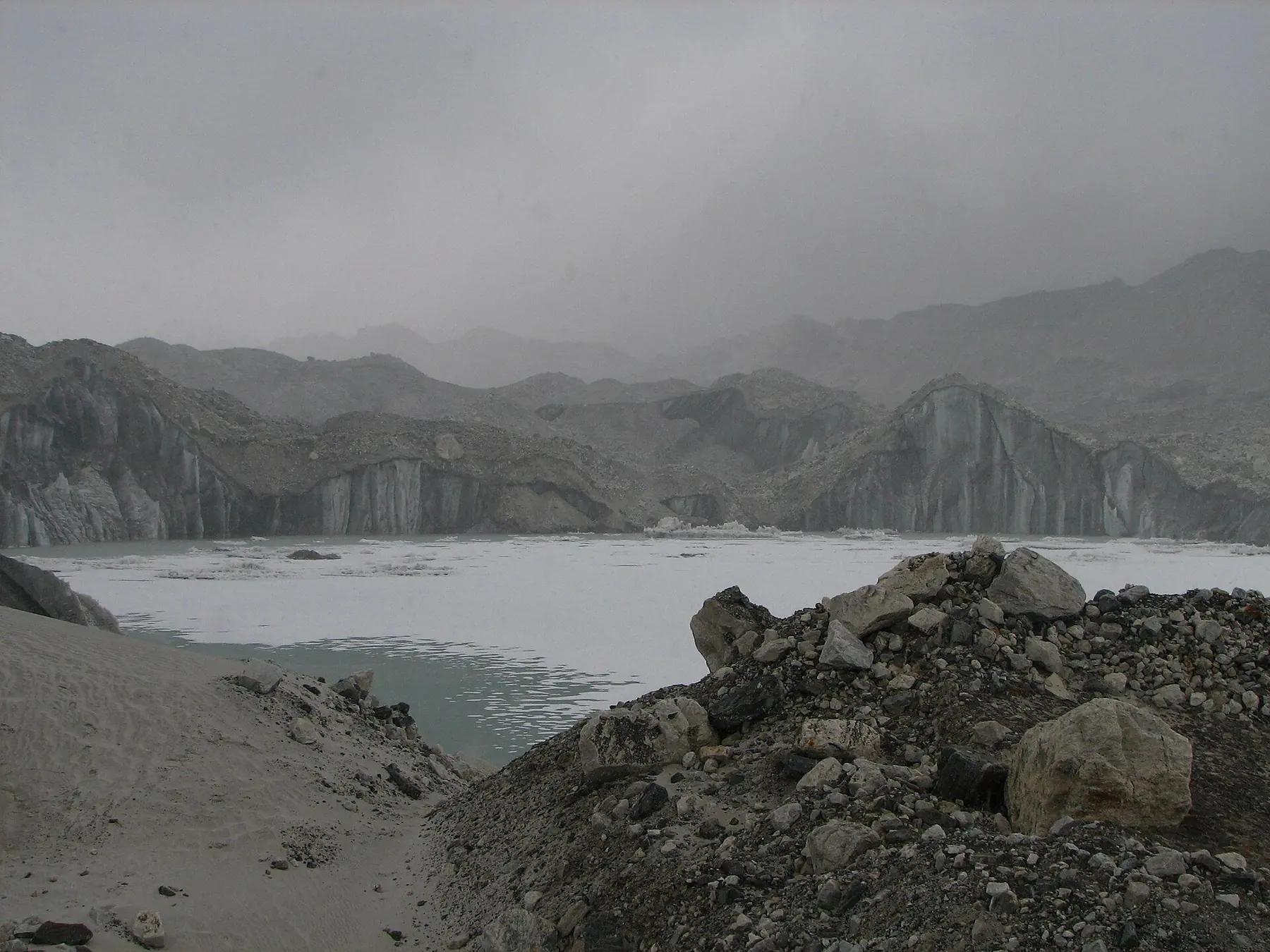
Above 4,500 metres you stop seeing cloud as weather and start seeing it as terrain. Lobuche sits inside a permanent wind-plucked mist of its own making — blown snow, ice crystals, the dust of the glacier. The clouds here don't drift; they hurtle, roped to the jet stream.
Walk high enough, and you come out the top of that too. The last layer parts, and the sky above the Khumbu is not blue but black-blue — the colour air makes when there is almost none of it left between you and space.
Field note
Written from 4,940 m — Lobuche. Names, places, and conditions as encountered — editorial content, not a route guide.