Craft · 1,400 m — Kathmandu
Preparing for a 6,000m Peak
A training and gear guide for your first Himalayan summit
9 min read · Expedition Journal · March
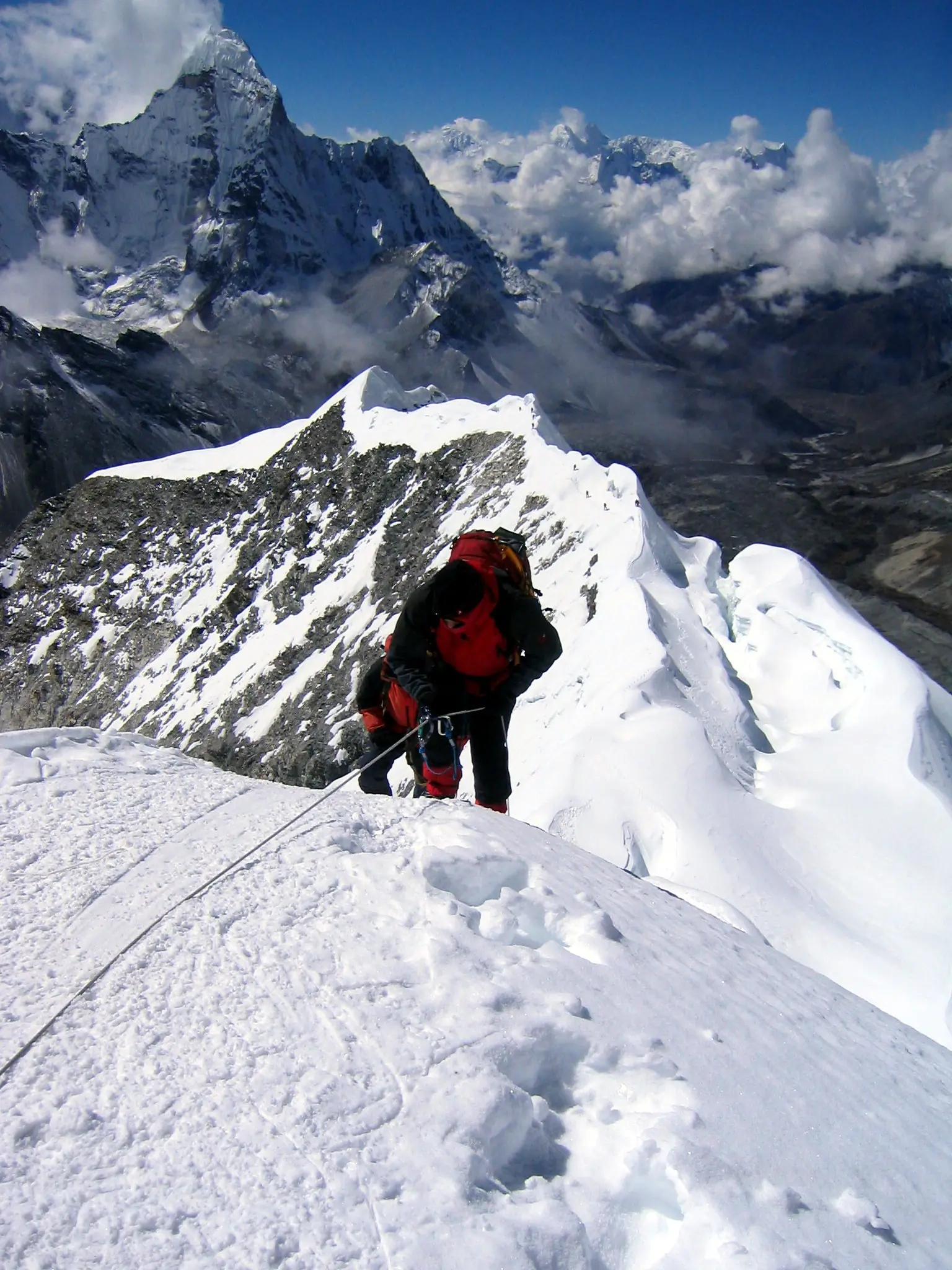
You cannot train for altitude at sea level. You can only arrive fit, patient and well-organised — the mountain trains you.
The three-month body
A 6,000 m peak is 80% walking fitness and 20% technical craft. Build the walking engine first: three months of 3–4 sessions a week, weighted hill climbs or stair machine, and one long day on weekends. The famous trekking-peak formula — 'be able to walk uphill for six hours, two days in a row' — remains unbeaten.
You cannot train for altitude at sea level. You can only arrive fit, patient and well-organised — the mountain trains you, and the itinerary is the training plan. Never skip the acclimatisation days; they are the summit's hidden engine.
The gear that matters
Boots first: a genuine B2/B3 mountaineering boot, worn in for weeks. Then: proper layers — merino base, insulated mid, hardshell; a down suit of a jacket rated to -25°C; insulated gloves plus liners; three pairs of socks and a system for keeping them dry.
Group gear — ropes, crampons, ice axe, helmet, harness — is provided on guided trips and checked at base camp. Personal gear is your responsibility. Bring headlamps with fresh batteries: summit starts are 2 a.m., in the dark, at -20°C.
The mental file
Every experienced guide says the same thing: the summit is optional, the descent is mandatory. Decide before you leave Base Camp that turning back is a real outcome, and the mountain becomes dramatically safer. Weather windows, cold fingers, a bad morning — any one of these ends a summit bid; none of them should end a life.
Then enjoy it. A first 6,000 m summit is one of the very few travel experiences that genuinely changes what you think your body and your patience can do. Sunrise from the top of Island Peak, with Lhotse's entire south face burning gold above you, is worth every cold hour of the training.
Field note
Written from 1,400 m — Kathmandu. Names, places, and conditions as encountered — editorial content, not a route guide.