Field notes · 5,364 m — Everest Base Camp
The First Morning at Base Camp
What 5,364 metres actually feels like at 6 a.m.
5 min read · Expedition Journal · May
The icefall does not creak politely. It sounds like a quarry being moved by hand somewhere in the dark.
You do not sleep at Base Camp; you close your eyes and wait for morning. The night is a series of breaths — yours, the tent fabric's, the glacier's. Somewhere around three a.m. the icefall starts to talk.
The Khumbu Icefall does not creak politely. It sounds like a quarry being moved by hand somewhere in the dark: deep cracks, then a long grinding sigh as a house-sized block settles. Nobody in the tent says anything. Everyone is awake.
Sunlight takes eleven minutes to arrive
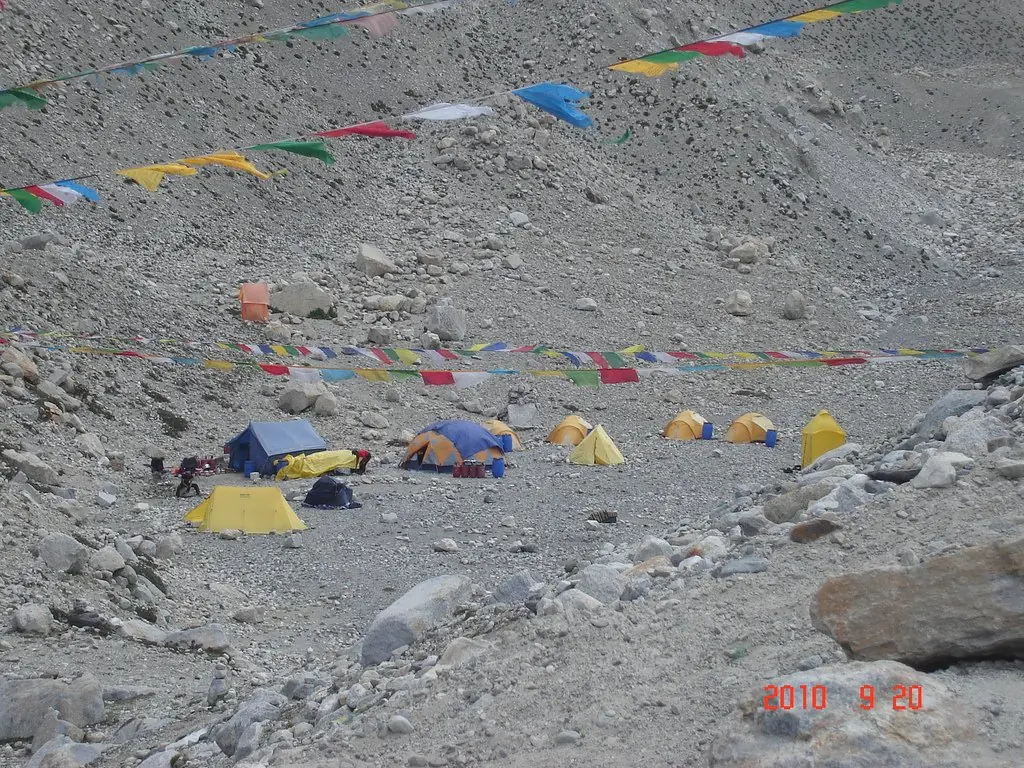
At 6:15 the sun clears the Nuptse ridge and Base Camp lights up like a struck match — yellow tents turning gold, prayer flags snapping awake. The cold goes from killing to merely brutal in about four minutes. This is the only weather forecast you need: sun means everything.
The first morning ritual is not climbing. It is standing in line at the mess tent with a metal bowl of porridge, watching the sun work its way down the Lhotse Face, and understanding for the first time that the mountain is a place of work — that the ropes on the icefall are a commute.
Field note
Written from 5,364 m — Everest Base Camp. Names, places, and conditions as encountered — editorial content, not a route guide.